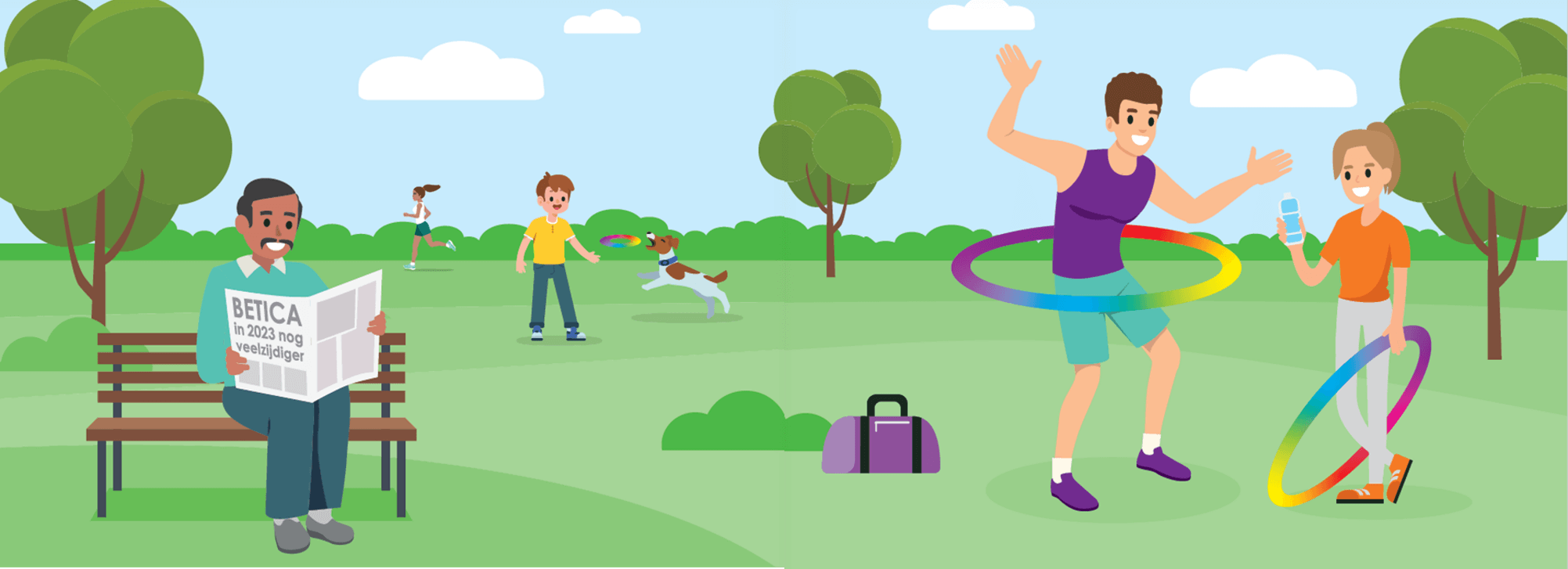
Sport is healthy for everyone. Maar especially for people with diabetes! Sports can not only help the bloodglucose levels improve. It helps also in order to manage weight. And om dhe blood pressure. Did you know that sports provides het improving cholesterol? Het risk of cardiovascular disease is reduced.
But exercising with diabetes can also be challenging. Ombecause you have to take into account your medication. And you should think about your diet and your blood sugar. Below we give tips on safe exercise with diabetes. Lees je mee?
Diabetes and exercise
Sports and diabetes go well together. Provided you know how to prepare yourself. And what to do during and after exercising. This is because sport and exercise affect your blood sugar. This is because your body uses more energy. And thus needs more insulin.
Exercise preferably several times a week. Regular exercise leads to reduced insulin requirements. Even on days when you don't exercise! Did you already know this?
Sometimes your blood sugar may drop or rise. This depends on the type, duration and intensity of the sport. For example, your blood sugar may rise in a sport that releases a lot of adrenaline. Find the right balance between insulin, carbohydrates and blood glucose levels. This ratio is different for everyone.
This is why it is important to measure your blood sugar. This is because the effect of exercise is different for everyone. Do this before, during and after exercise. In addition, you should not only adjust your medication to your activity, but also your diet and fluid intake.
Exercising with type 1 diabetes
Exercising with type 1 diabetes has a positive effect on your health. It can improve your quality of life. But exercising with type 1 diabetes also requires extra attention. People with type 1 diabetes do not produce insulin. And therefore have to inject insulin or use an insulin pump. Insulin allows glucose from blood to be absorbed into cells. This serves as fuel. When you exercise, you consume more glucose. And so you need less insulin.
You can also make a hypo get. You get a hypo because your body uses more energy. As a result, more glucose needs to get to the cells. And then the glucose level in the blood drops. This can happen when you inject too much insulin. Or when you eat too little.
In a hypo, your blood sugar drops below 4 mmol/l. You may experience symptoms such as sweating. Besides sweating, you may start shaking or become dizzy. Other symptoms include hunger, headache or fatigue. A hypo can be dangerous and should be treated quickly. You can treat it with quick sugar. Such as dextrose, soda or fruit juice.
Did you eat after exercising? Then eat 10 to 15 grams of extra carbohydrates with your meal. Do not count these carbohydrates when determining your insulin dose. In addition, you can divide the number of carbohydrates by a higher carbohydrate ratio. This will also make you give less insulin with your meal.
To prevent or treat a hypo, follow these steps:
- Measure your blood sugar before exercising. And make sure it is between 6 and 10 mmol/l. Is your blood sugar below 6 mmol/l? Then eat extra carbohydrates.
- Reduce your insulin dose before exercising. This depends on the duration and intensity. Talk to your doctor or diabetes nurse about how much to reduce. With an insulin pump, you can reduce or temporarily stop the basal setting.
- Eat a carbohydrate-rich meal or snack before exercise. Such as bread, fruit, granola bar or yoghurt. Take extra carbohydrates with you for during and after exercise. In case you get or feel a hypo coming on.
- Drink plenty of water to prevent dehydration. Avoid alcohol and caffeine. Because these can affect your blood sugar.
- Measure your blood sugar during exercise. Especially if you exercise for more than an hour. Or if you are doing a new or intense sport. If your blood sugar is too low, take fast sugars. And stop exercising until your blood sugar returns to normal.
- Measure your blood sugar After exercise. Make sure it is above 5 mmol/l. Is your blood sugar too low? Then eat a carbohydrate-rich snack or meal. Your blood sugar can continue to drop for hours after exercise. So measure your blood sugar regularly. And, when necessary, eat extra carbohydrates.
- Always wear a medical identification tag or bracelet. This states that you have type 1 diabetes. This way, others can help you if you get a hypo.
- Exercise with someone who knows you have diabetes. And who knows how to act in case of a hypo.
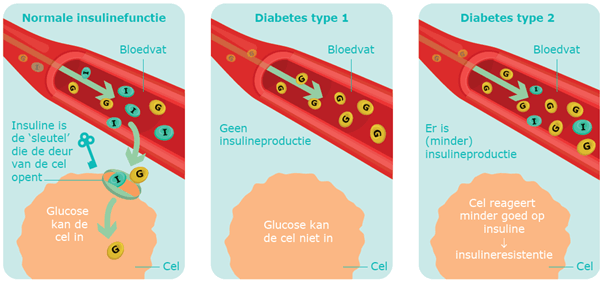
Exercising with type 2 diabetes
Exercising with type 2 diabetes has many benefits. Indeed, exercising can help to:
- Lower your blood glucose levels
- Improve your insulin sensitivity
- Reduce your weight
- Lower your blood pressure
- Improve your cholesterol
- Reduce your risk of cardiovascular disease
- Improve your mood.
But exercising with type 2 diabetes can be risky. Think hypo and hyper. And you may suffer an injury or infection. With a hyper your blood sugar rises above 10 mmol/l. You experience symptoms such as thirst. You have to urinate a lot. You get a dry mouth. You feel tired. Or you start seeing blurred.
A hyper occurs when too little insulin is made or used. This happens when you eat or drink too much. But also when you are stressed or ill. In addition, a hyper can occur if you exercise intensively. Because your body then produces stress hormones that raise your blood sugar. A hyper can be harmful to your organs. It should be treated with extra insulin. It also helps to drink water.
To prevent or treat hyper, follow these steps:
- Measure your blood sugar before exercise. Make sure it is below 10 mmol/l. Is your blood sugar too high? Then postpone exercising. Or adjust your medication or diet.
- Do you use insulin or drugs that lower your blood sugar? Such as metformin and sulphonylurea derivatives. But also GLP-1 agonists. If so, consult your doctor or diabetes nurse. They advise how to adjust your dose for sports. This is because some medications can cause a hypo during exercise. If you use insulin, you can lower your dose. You can also change the injection site. Do you use pills? Then you can reduce your dose. Or you can change the time of intake.
- Eat a carbohydrate-rich meal or snack before exercise. Think bread and fruit. Or eat a granola bar or yoghurt. Take extra carbohydrates with you for during and after exercise. Just in case you get or feel a hypo coming on.
- Drink plenty of water to prevent dehydration. Avoid alcohol and caffeine. Because these can affect your blood sugar.
- Measure your blood sugar during exercise. Especially if you exercise for more than an hour. Or if you do a new or intense sport. Is your blood sugar too high? Then stop exercising and drink water. Is your blood sugar too low? Then take fast sugars immediately. And stop exercising until your blood sugar returns to normal.
- Measure your blood sugar after exercise. Make sure it is between 4 and 10 mmol/l. Is your blood sugar too high? Then take extra insulin or medicine. It also helps to drink water. Is your blood sugar too low? Then eat a carbohydrate-rich snack or meal. Your blood sugar can drop for hours after exercising. So take this into account.
What effect does intense exercise have on blood sugar?
Intense exercise can have varying effects on your blood sugar. This depends on your type of diabetes. But also on your medication and diet. Your physical condition is also an important factor in this. Intense exercise means that your heart rate and breathing go up. And that you sweat a lot in the process. Examples of intensive sports are running and cycling. Intense exercise can affect your blood sugar in two ways:
- Your blood sugar may drop. Because you consume more glucose and need more insulin. This can lead to a hypo. Especially if you've injected too much insulin. Or when you have eaten too little. A hypo can occur during or after exercise. Sometimes even up to 24 hours after exercising. Take several actions to prevent and treat a hypo. Measure your blood sugar regularly. You can also adjust your insulin dose. You can also eat and drink extra carbohydrates.
- Your blood sugar may rise. Because your body produces stress hormones that raise your blood sugar. This can lead to hyper. Especially if you already have high blood sugar. A hyper can occur during or after exercise. Sometimes even up to 48 hours after exercising. You can prevent a hyper. To do this, you need to measure your blood sugar regularly. You can take extra insulin or medication. And it is important to drink water. Seek medical help if your blood sugar does not go down.
How long to wait to exercise after eating?
- For a large meal, wait 2-3 hours. That way, you give your body time to digest. And to absorb the glucose. Do you start exercising too soon after a large meal? Then you may experience stomach upset and nausea. And even cramps or a hypo. So pay close attention to this.
- With a small meal, wait at least 30 to 60 minutes. This gives the body time to digest the food. And absorb the glucose from the food. Do you start exercising too quickly after a snack? Then you may suffer from a hypo or hyper.
- If you are going to exercise sober be extra careful. When you are sober, you have not drunk or eaten anything. In fact, exercising sober can lead to a hypo. Because your body no longer has glucose to burn. Exercising sober can also lead to a hyper. Because your body produces stress hormones that raise your blood sugar. Exercising sober is therefore not recommended for people with diabetes. Unless you are under the supervision of a doctor or diabetes nurse.
When to take dextrose?
Grape sugar is a form of fast sugar. Dhe can je take bij a hypo. As if suffering from hypo feel coming. Grape sugar is quickly absorbed into your blood. The raises your blood sugar within minutes. Grape sugar is found in Dextro.
Say hello 👋 to Betica Halo
Maak kennis met de nieuwste Betica HALO pennaalden, een evolutie op pennaaldengebied, die zorgt voor:
- Meer injectiecomfort
- Meer controle over de insuline toediening
- Meer gebruiksgemak door de grotere beschermkap
Probeer Betica HALO zelf en vraag een gratis proefpakket aan.
It is best to take dextrose in the following situations:
- If your blood sugar is below 4 mmol/l. Then immediately take 15 to 20 grams of dextrose. This is 5 to 6 pieces of Dextro. And measure your blood sugar again after 15 minutes. Is your blood sugar still late? Then repeat the dose of dextrose. And measure your blood sugar again after 15 minutes. Keep doing this until your blood sugar is above 4 mmol/l.
- If your blood sugar is between 4 and 6 mmol/l. But you are going to exercise or don't feel well. Then also take 15 to 20 grams of dextrose. And measure your blood sugar again after 15 minutes. Is your blood sugar still too low? Then repeat the dose of dextrose. And measure your blood sugar again after 15 minutes. Keep doing this until your blood sugar is above 6 mmol/l.
- If your blood sugar is higher than 6 mmol/l. But you have symptoms of a hypo. These include sweating and trembling. But dizziness, hunger, headache or fatigue are also signs. So take 15 to 20 grams of dextrose. And measure your blood sugar again after 15 minutes. Is your blood sugar still too low? Then repeat the dose of dextrose. And measure your blood sugar again after 15 minutes. Keep doing this until your blood sugar is above 6 mmol/l.
After dextrose, it is important to eat carbohydrate-rich food. For example, bread or fruit. This will prevent your blood sugar from falling quickly again. And that you will have another hypo. Always keep dextrose with you. That way you can use it if you get a hypo. Or feel a hypo coming on.
Disclaimer
Van Heek Medical heeft dit blogartikel met de grootst mogelijke zorgvuldigheid laten schrijven door externe deskundigen. Ondanks de betrachte zorgvuldigheid staat Van Heek Medical er niet voor in dat de informatie volledig, juist en/of up-to-date is. De informatie is uitsluitend bedoeld als algemene informatie. Van Heek Medical is niet aansprakelijk, uit welke hoofde dan ook, voor schade die voortvloeit uit en/of verband houdt met de informatie. Deze informatie is nimmer een vervanging voor medische zorg. Ieder mens is uniek. Aanpassingen in uw dieet dienen te allen tijde pas te geschieden na consultatie en in nauw overleg met de zorgverlener bij wie u onder behandeling bent. Kennelijke vergissingen of kennelijke fouten binden Van Heek Medical niet.